

Introduction
The Red Sea crisis has reshaped Asia-Europe ocean shipping since late 2023. While partial route recovery has been observed in 2026, shippers, importers and industrial buyers still face persistent security volatility, fluctuating transit schedules and hidden supply chain exposure. This article reviews the origin of the disruption, quantifies the lasting impact of Cape of Good Hope diversion, interprets current Suez Canal throughput data, outlines three plausible future scenarios, and delivers actionable delivery planning strategies for cross-border businesses.
1. The Origin of the Red Sea Crisis Starting in Late 2023
The shipping disruption across the Red Sea and Bab el-Mandeb Strait emerged at the end of 2023, triggered by regional conflicts that introduced direct security threats to commercial vessels transiting this chokepoint.
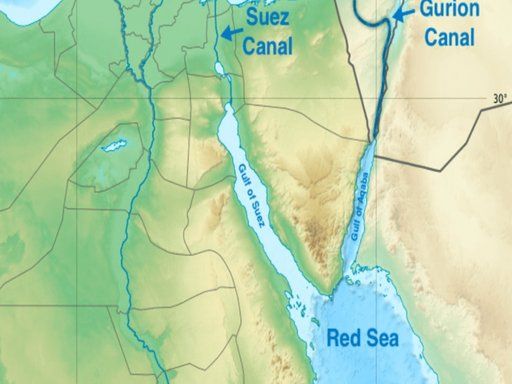
As a critical shortcut linking the Indian Ocean and Mediterranean Sea, the Suez Canal and Red Sea corridor handles a large share of Asia-Europe and Asia-Middle East container trade. Vessel attacks and security warnings forced many liner carriers to suspend direct transit and reroute vessels away from the Red Sea.
What began as isolated incidents quickly evolved into a systemic shipping shock. Carriers imposed emergency surcharges, blanked sailings became frequent, and reliability benchmarks for Suez Canal shipping routes deteriorated sharply. The event exposed how concentrated reliance on a single maritime chokepoint can rapidly break down ocean freight stability for global supply chains.
2. How Cape of Good Hope Diversion Hits Vessel Rotation, Effective Capacity and Lead Times
Diverting vessels around the Cape of Good Hope is the most common alternative when the Red Sea passage becomes unsafe, yet this workaround carries cascading operational costs.
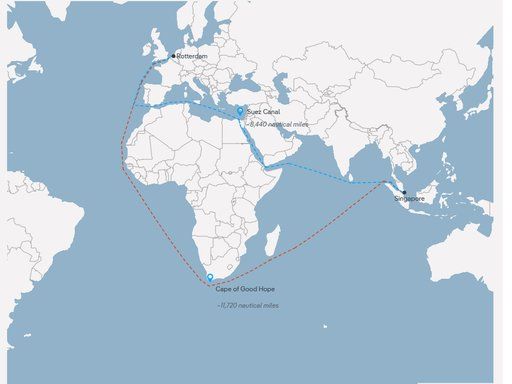
Compared with the Suez route, the Cape route adds thousands of nautical miles to each voyage. Extended sailing time directly slows vessel rotation: the same container ship can complete fewer round trips between Asia and Europe within a given window. This creates a hidden capacity squeeze — even if the total number of vessels on the trade lane stays unchanged, effective usable capacity shrinks.
Longer transit also pushes up Asia Europe shipping transit time by 10–20 days on average. Extended lead times ripple through the whole supply chain: buyers face delayed production feedstock, finished goods miss customer delivery windows, inventory safety stock rules need rewriting, and carriers struggle to honour original sailing schedules. Bunker consumption, insurance premiums and port congestion costs further lift overall freight costs.
Many shippers learned a hard lesson: diversion is not a simple “Plan B”. It redefines the baseline of transit reliability on the Asia-Europe trade.
3. 2025’s Easing Expectations and New Security Uncertainties for 2026
Through 2025, market sentiment gradually improved as temporary de-escalation brought a partial return of carrier services to the Red Sea. Many logistics teams built budgets and delivery forecasts on the assumption that Suez Canal shipping routes would steadily normalise.
The outlook entering 2026, however, has turned more nuanced. Limited security agreements are fragile, and underlying regional tensions have not been fully resolved. New risk factors keep emerging: shifting attack patterns, changing insurance clauses, inconsistent carrier risk appetite, and sudden advisory updates from flag states.
This creates a mixed environment: the Red Sea is no longer fully closed, but it cannot be treated as a low-risk, stable corridor either. The old pre-2023 operating model — fixed transit times, predictable freight rates and minimal contingency stock — is no longer safe for supply chain planning.
4. What Latest Throughput Data Tells Us: Routes Are Recovering, Not Fully Back to Pre-Crisis Levels
Latest Suez Canal traffic statistics confirm a clear recovery trend: more container lines have resumed Red Sea calls, weekly vessel transits are rising, and emergency surcharges have retreated from their peak levels.
Even so, the market remains below the pre-crisis baseline. Some carriers still split services: deploying part of their fleet via Suez while keeping other sailings routed around the Cape. Vessel speed adjustments, selective transit suspensions and ad-hoc security checks continue to add variability.
For shippers, this means partial recovery is not equal to full normalisation. Schedule reliability remains volatile. Freight rates are less extreme than in early crisis stages but remain sensitive to any sudden security event. Ocean freight and supply chain risks have moved from “acute shutdown risk” to “permanent background volatility”.
5. Three Future Scenarios and Impacts for Exporters and Importers
Businesses should prepare plans against three plausible scenarios for Red Sea shipping in 2026:
Scenario 1: Gradual Stabilisation (Base Case)
Security incidents stay low; most carriers resume regular Suez transit. Asia-Europe transit time settles slightly above pre-2023 levels, freight rates moderate.Impact: Lower diversion cost, but occasional short-term disruptions still occur. Suitable for lean inventory with modest safety buffers.
Scenario 2: Intermittent Disruption (High-Likelihood Risk Case)
Periodic security alerts trigger temporary suspension of Red Sea transit. Carriers switch sailings between Suez and Cape dynamically. Schedules become inconsistent, spot freight spikes happen suddenly.Impact: The most challenging scenario for planning. Both exporters and importers face delivery slippage, production interruption and margin pressure. Dual routing options are essential.
Scenario 3: Severe Re-escalation (Downside Case)
Widespread threats force most carriers to exit the Red Sea again. Mass rerouting to the Cape returns, effective capacity tightens sharply and transit times extend again.Impact: Major lead time extension, sharp freight hikes, blank sailings and port congestion. Businesses relying on just-in-time sourcing will be hit hardest.
No single scenario can be guaranteed. The best strategy is scenario-based planning rather than betting on one fixed outcome.
6. How Industrial Buyers Build More Robust Shipping Plans
For industrial procurement teams relying on Asia-Europe ocean transport, static shipping plans are no longer sufficient. Below are practical measures to mitigate ocean freight and supply chain risks:
Dual routing options in contracts: Negotiate with forwarders and carriers to include both Suez and Cape alternatives, with clear trigger clauses for switching routes when security alerts rise.
Reset transit time assumptions: Build lead times based on the longer Cape benchmark, not pre-2023 Suez schedules. Add contingency buffers for industrial materials and critical components.
Segment inventory by criticality: Keep higher safety stock for high-value, production-critical parts; apply lean stock for non-urgent goods.
Diversify sailing schedules: Avoid concentrating all cargo on one carrier or one weekly sailing. Spread shipments to reduce exposure to blank sailings or sudden route suspensions.
Monitor real-time risk signals: Track canal throughput, carrier circulars, war risk insurance updates and regional security advisories. Set internal alert thresholds for rerouting decisions.
Align commercial terms with logistics risk: Review Incoterms, freight escalation clauses and delivery deadlines with customers. Communicate volatility transparently to avoid penalty disputes.
Conclusion
Red Sea shipping in 2026 sits in a fragile recovery phase. Suez Canal shipping routes are coming back, but the Asia-Europe trade lane has permanently absorbed new layers of ocean freight and supply chain risks. The era of predictable, low-variability transit is over.
For exporters, importers and industrial buyers, the core shift is mindset: moving from reactive crisis response to proactive scenario planning. Those who build flexible routing, realistic lead time modelling and diversified shipment arrangements will be far better positioned to absorb shocks, protect production schedules and stabilise customer delivery commitments through the rest of 2026 and beyond.